Why Every Kiwi Home Should Consider a Rainwater Tank
Every summer, the sun finally turns up in Taranaki, and almost like clockwork, the council water restrictions follow suit. You’re left watching your veggie patch wilt, your lawn go brown, and your car collect dust because you’re not allowed to turn on the hose.
Here's the thing: Taranaki isn't short on rain. New Plymouth gets around 1,400mm in a typical year. The catch is timing. Most of it falls through autumn and winter, then summer rolls around, everyone turns the sprinklers on at once, and the council has to step in.
A rainwater tank lets you bank the wet months for the dry ones. In this guide we'll walk you through why a tank is worth it, how the system actually works, what size you need, what it's likely to cost, and how to keep it running properly. It's the same stuff we'd tell you if we were standing in your backyard having a look.

👆🏻Your lawn, looking especially dry this summer
Why Add a Rainwater Tank?
When you install a domestic rainwater harvesting system, you’re capturing thousands of litres of pure water that would otherwise run straight into the stormwater drains.
Here's why adding a water tank to your property is one of the smartest upgrades you can make:
Lower Water Bills
If your home is on a metered water supply, every outdoor hose-down, toilet flush, and washing machine cycle costs you. Capturing roof runoff means the water itself is free. Plumbed into your house, a tank can drop your mains water usage by up to 50%.
Emergency Resilience
Summer droughts, infrastructure upgrades, and heavy storm events can all disrupt municipal supply. A dedicated tank gives your household a personal water reserve so you’re never caught out.
Healthier Gardens
Mains tap water is treated with chlorine. Rainwater is naturally soft, chemical-free, and packed with micro-nutrients that soil and plants love.
Sleek Modern Designs
Today’s tanks aren't the giant concrete eyesores of the past. Modern slimline models slide neatly alongside fences, fit under decks, or come colour-matched to popular roofing colours like Ironsand and Grey Friars.
Environmental Benefits: Why Mother Nature Will Thank You
Installing a rainwater tank isn't just great for your wallet and garden - it plays a massive role in protecting the local environment and waterways:
Eases Pressure on Local Water Supplies: During hot summer months, municipal water infrastructure works overtime to meet demand. Using harvested rainwater for your garden, car washing, or toilet flushing relieves stress on local reservoirs and river intakes.
Reduces Stormwater Runoff & Erosion: When heavy downpours hit, hard surfaces like roofs and driveways create huge volumes of fast-moving runoff. By catching rain right at your roofline, you reduce the sudden rush of stormwater rushing into local drains, helping prevent urban flooding and soil erosion.
Protects Local Streams & Harbours: Excess urban runoff washes oil, dust, heavy metals, and garden fertilisers directly into local streams, rivers, and coastal beaches. Harvesting rain slows this down and means less of it reaches the stormwater system.
Shrinks Your Household Carbon Footprint: Treating town water and pumping it through kilometres of municipal pipework takes a significant amount of electricity and chemical processing. Using water that falls directly onto your roof cuts down on the energy required to process and transport treated mains water.

How a Rainwater System Actually Works
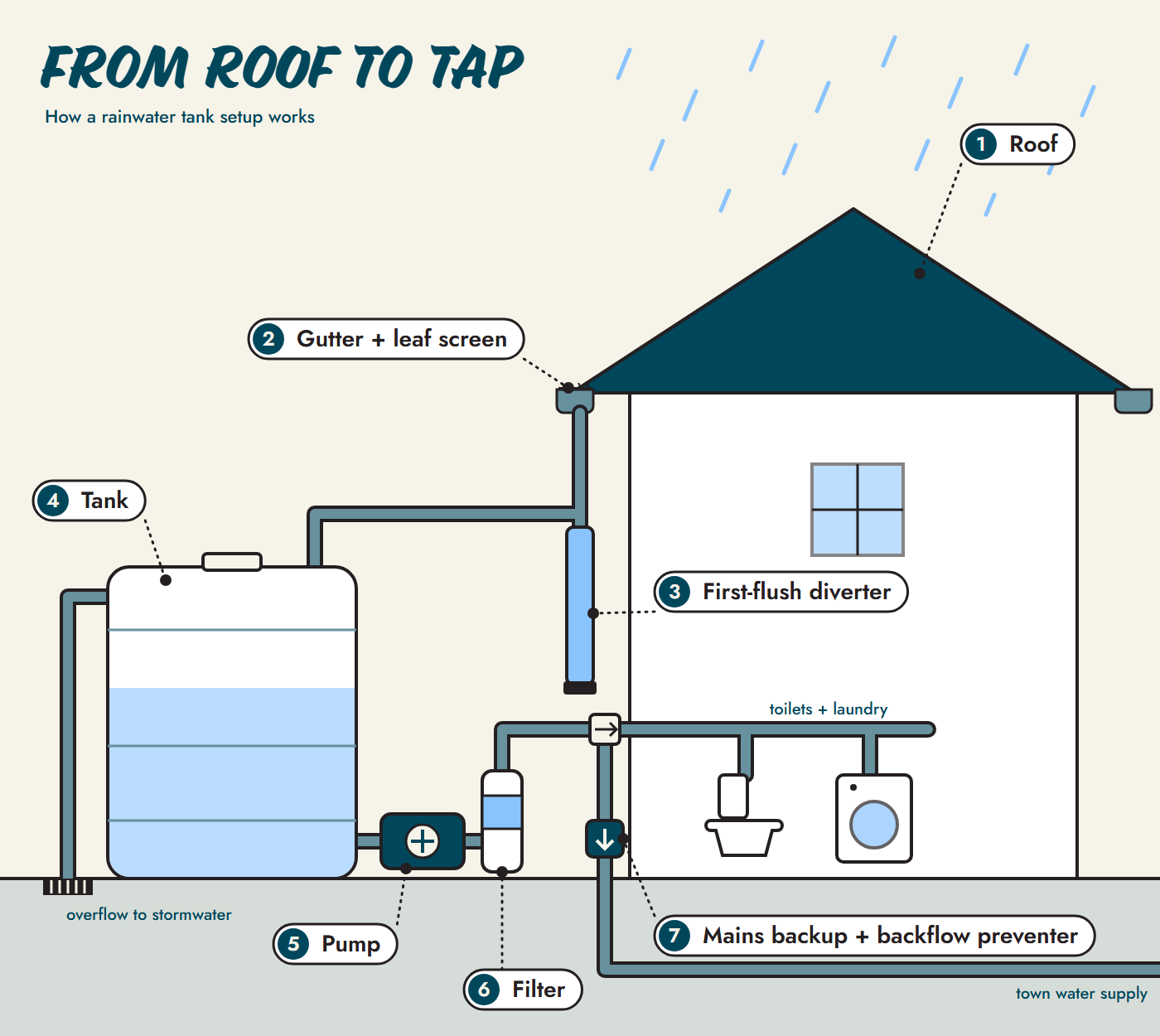
A rainwater tank is more than a big plastic bucket at the end of a downpipe. A good setup has a few parts working together to keep the water clean and get it where you need it. Getting every one of these parts right is the difference between a tank that quietly does its job for decades and one that smells, runs dry or costs you in repairs. Here's the journey a raindrop takes:
- 1
Your roof catches it. Every square metre of roof collects about a litre of water for every millimetre of rain that falls.
- 2
Gutters and leaf screens stop the big stuff. Leaves, twigs and moss get caught before they reach the tank.
- 3
A first-flush diverter dumps the dirty first bit. The first few litres of every rainfall wash dust, bird droppings and grime off your roof, so the diverter sends that water away instead of into your tank.
- 4
The tank stores it. An overflow pipe sends any extra water safely to the stormwater system once the tank is full.
- 5
A pump gets it where it needs to go. Unless your tank sits higher than where you're using the water, you'll need a pump for decent pressure at the tap, toilet or washing machine.
- 6
Filters clean it up. What you need depends on how you're using the water, from a simple sediment filter for the toilets to full UV treatment if you're drinking it. More on that below.
- 7
A backup keeps you covered. In town, a switch-over valve can flip you back to mains water automatically if the tank runs low, and a backflow preventer stops tank water getting into the public supply.
Taranaki Weather, and Why the Plumbing Matters
Down here in Taranaki, we get hit with a unique mix of coastal salt air, sudden downpours, and severe dry spells in late summer.
Connecting a tank isn't just a matter of dropping a plastic tub on the grass. Under New Zealand plumbing regulations, connecting a rainwater system directly to your home’s internal plumbing (like toilets or laundry) requires proper backflow prevention, leaf-screening, first-flush diverters, and correct pump setup to ensure mains water isn't contaminated. Hooking a tank into your house is restricted plumbing work, so it needs a licensed plumber.
 July
July February
Swipe →
Winter: free water pouring off the roof. Summer: a brown lawn and a hose ban.

Water tanks + Pumps + Filtration · Taranaki
Thinking tank? Let's get it plumbed in right.
We’re How Good Plumbing & Gas. Based in New Plymouth, we’re your local licensed plumbers, gasfitters, and drain layers covering all of Taranaki. We install and service water tanks, pumps and filtration systems, and we’ll make sure your tank is plumbed in properly and to code.
How Good. The tradies you can trust.
What Size Tank Do You Actually Need?
How to Work Out the Right Size for Your Place
There's a simple formula you can use to see how much water your roof could collect in a year:
Roof area (m²) × annual rainfall (mm) × 0.8 = litres per year
The 0.8 allows for water lost to evaporation, splash and the first-flush diverter.
For example, a typical New Plymouth home with a 150m² roof and around 1,400mm of rain a year could collect about 168,000 litres a year. That's a lot of free water. The real question is how much you'll use, and how long the tank needs to carry you through the driest stretch of summer.
As a rough guide, the average Kiwi uses around 200 litres of water a day. If you only want to run the garden and wash the car, a smaller tank will do the job. If you want to plumb it into your toilets and washing machine, or live off it completely, you'll need to size up to get through a few dry weeks.
Not sure where you land? We're happy to run the numbers for your place.
Garden & Washdowns
Perfect for small urban properties. Keep garden beds thriving and buckets filled for car washes all summer.
Partial House Supply
Covers outdoor watering plus plumbing into toilets and washing machines.
Full Household Independence
Essential for semi-rural or lifestyle properties off the mains grid.
How much could your roof catch?
Pop in your numbers for a rough idea.
Not sure? Most homes are somewhere around 120–200m².
New Plymouth is around 1,400mm a year.
Your roof could collect
168,000 L
a year, or about 14,000 L a month on average.
Your household uses roughly
18,300 L
a month (at around 200L per person per day).
Rough guide only. Rain doesn't fall evenly, so the right tank size depends on how long you need to get through dry spells. Get a free quote and we'll size it properly for your place.
Can You Drink Rainwater From a Tank?
You can, but it needs to be treated properly first. Rainwater picks up bacteria and contaminants from your roof, gutters and anything that's been sitting up there, like bird droppings, leaves or the odd possum.
If you're planning to drink your tank water, the setup usually includes:
A first-flush diverter and leaf screens to stop the worst of it getting in
A sediment filter to catch fine particles
A UV steriliser to kill bacteria and other bugs
Regular maintenance and water testing to make sure it stays safe
Most homes in town use tank water for the garden, toilets and laundry, and keep drinking water on the mains. That's often the simplest and most cost-effective setup. If you're rural and the tank is your only supply, getting the treatment right matters a lot more, and it's worth having a professional look over the whole system.
How Much Does a Rainwater Tank Cost?
The honest answer is: it depends on what you want it to do. The total usually comes down to a few things:
The tank itself: size, material (plastic, steel or concrete) and shape (round or slimline)
Site prep: a level, compacted base or platform for the tank to sit on
The pump: needed for most setups that feed into the house
Filtration: from a simple sediment filter up to full UV treatment for drinking water
Plumbing: connecting the tank to your downpipes, your house and your mains backup
As a ballpark, a small garden tank setup can start from around $[X], while a tank plumbed into your toilets and laundry usually sits somewhere around $[X–Y]. A full off-grid supply with drinking water treatment costs more again.
Every property is different, so the best way to get a real number is a free, no-obligation quote. We'll come out, have a look and give you a clear price with no surprises.
Do You Need a Consent for a Rainwater Tank?
Sometimes. Smaller tanks sitting on the ground often don't need a building consent, but larger tanks, raised tanks or tanks on stands can, depending on their size and height. It's worth checking with New Plymouth District Council before you buy, or ask us and we'll point you in the right direction.
What isn't optional is who connects it. Hooking a rainwater tank into your home's plumbing is restricted plumbing work in New Zealand, so it has to be done by an authorised plumber. If your tank also connects to the mains, you'll need the right backflow prevention so tank water can't get into the town supply. Getting this wrong can contaminate your own water and your neighbours', which is exactly why the rules are there.
Looking After Your Water Tank
A rainwater tank doesn't need a lot of attention, but a little regular care keeps the water clean and the system running smoothly. Here's a simple checklist.
Your tank care checklist
Clean your gutters, and again after big storms Every 3–6 months
Check and clear the leaf screens and first-flush diverter Regularly
Look inside the tank for sludge, cracks or anything that's found its way in Once a year
Get the sludge cleaned out, or sooner if it builds up Every few years
Replace filter cartridges when the manufacturer recommends, and the UV lamp if you have one UV: once a year
Get your pump checked if the pressure drops or it keeps cycling on and off As needed
If you'd rather not climb ladders or peer into tanks, that's what we're here for.
Rainwater Tank FAQs
Is a rainwater tank worth it if I'm on town supply?
Yes, especially if you're on a water meter or you lose your garden to water restrictions every summer. Even a small tank for the garden makes a big difference.
Can I install a rainwater tank myself?
You can set up a standalone garden tank off a downpipe yourself. But connecting a tank to your house plumbing, like the toilets or washing machine, is restricted work and has to be done by an authorised plumber.
How long do rainwater tanks last?
A good quality plastic tank can last 20 years or more with basic maintenance. Many come with long manufacturer warranties, so check what's included when you buy.
What happens if my tank runs dry?
If your tank is plumbed into the house with a switch-over valve, it changes you back to mains water automatically, so you're never left without. Off-grid properties can get a water delivery to top up.
Why does my tank water smell?
Usually it's organic matter like leaves or sludge breaking down in the tank, or water sitting still in the pipes. Cleaning the gutters, screens and tank normally sorts it. If it keeps coming back, give us a call.
Do I need a pump?
Most setups do. Unless your tank sits well above where you're using the water, you'll need a pump to get decent pressure.
So, Is a Rainwater Tank Worth It?
For most Taranaki homes, yes. A rainwater tank cuts your water bills, keeps the garden alive through summer restrictions, gives you a backup when the supply is disrupted, and takes pressure off our local waterways. And with today's slimline and colour-matched tanks, it doesn't have to be an eyesore either.
The key is getting the setup right from the start: the right size for your roof and your needs, the right filtration for how you'll use the water, and a licensed plumber to connect it properly and to code. Do that and your tank will quietly do its job for years.
Thinking about a rainwater tank?
We’ll come take a look, help you pick the right size and setup, and give you a free, no-obligation quote so you know exactly what you’re in for.
Not sure what size tank or setup suits your place?
Send us a photo of your section and roofline and we’ll point you in the right direction.